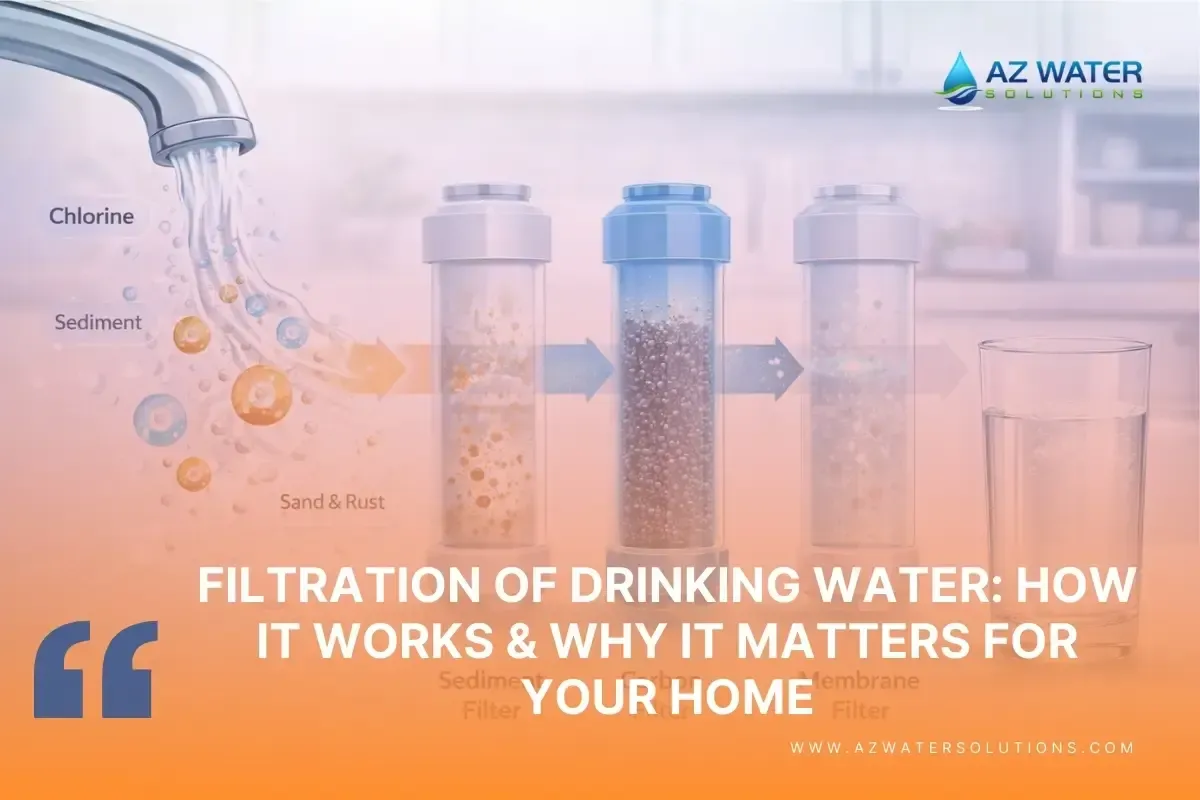
Filtration of Drinking Water: How It Works & Why It Matters for Your Home
Clean, good-tasting drinking water is essential for your health, your appliances, and your everyday comfort. Yet many households rely on untreated tap water that may contain chlorine, sediment, dissolved solids, or other contaminants VOC (volatile organic compounds), PFAS, Herbicides/ Pesticides, THMs, heavy metals and bacteria that affect taste and quality.
The filtration of drinking water is the process of removing unwanted substances from water to make it safer, cleaner, and better tasting. This guide explains how drinking water filtration works, the most common filtration methods, the benefits of filtered drinking water, and how to choose the right system for your home.
TABLE OF CONTENTS:
Filtration of Drinking Water: How It Works & Why It Matters for Your Home
What Is the Filtration of Drinking Water?
Why Drinking Water Filtration Is Important
How Drinking Water Filtration Works
Common Types of Drinking Water Filtration Systems
Under-Sink Drinking Water Filtration Systems
Reverse Osmosis Drinking Water Systems
Whole-House Filtration vs Drinking Water Filtration
Benefits of Drinking Water Filtration at Home
How to Choose the Right Drinking Water Filtration System
Frequently Asked Questions About Drinking Water Filtration
Q: What does filtration of drinking water remove?
Q: Is drinking water filtration better than bottled water?
Q: How often do drinking water filters need to be replaced?
Q: Can drinking water filtration systems be installed in any home?
What Is the Filtration of Drinking Water?
Filtration of drinking water refers to using physical, chemical, or biological processes to remove contaminants from water before it is consumed. These contaminants may include:
Chlorine and chloramines
Sediment, sand, and rust
Heavy metals
Dissolved solids
Unpleasant tastes and odors
Drinking water filtration does not necessarily make water “pure,” but it significantly improves water quality and safety for everyday use.
Curious about what’s actually in your drinking water?
Understanding your local water quality is the first step toward better filtration and healthier hydration.
Why Drinking Water Filtration Is Important
Even when municipal water meets safety standards, it can still contain substances that impact taste, smell, and long-term health.
Common reasons homeowners choose drinking water filtration include:
Improved taste and odor
Reduced exposure to chemicals
Protection from aging pipes
Better water for cooking and beverages
Reduced reliance on bottled water
In areas with hard or mineral-rich water, filtration also helps protect coffee makers, ice machines, and other appliances.
How Drinking Water Filtration Works
Most drinking water filtration systems use one or more of the following mechanisms:
Mechanical Filtration
Mechanical filters physically block particles such as sand, sediment, and rust. These are often the first stage in a drinking water filtration system.
Carbon Filtration
Activated carbon filters remove chlorine, chemicals, and organic compounds that affect taste and odor. Carbon filtration is one of the most common drinking water filtration methods.
Membrane Filtration
Membrane-based systems, such as reverse osmosis, use a semi-permeable membrane to remove dissolved solids and microscopic contaminants.
Combination Filtration
Many modern drinking water filter systems for homes combine multiple filtration methods to deliver cleaner, better-tasting water.
Common Types of Drinking Water Filtration Systems
Under-Sink Drinking Water Filtration Systems
Installed beneath the kitchen sink, these systems provide filtered water to a dedicated faucet.
Benefits:
Compact and discreet
Excellent for drinking and cooking
Affordable entry-level option
Reverse Osmosis Drinking Water Systems
Reverse osmosis systems provide advanced filtration by removing dissolved solids and contaminants.
Benefits:
Exceptional water purity
Great taste
Ideal for families concerned about water quality
Whole-House Filtration vs Drinking Water Filtration
Whole-house filtration treats all water entering the home, while drinking water filtration focuses on water used for consumption. Many homes benefit from using both systems together. It is important to have a multi-stage whole house filtration system because different types of media filter various contaminants. Industry professionals should be able to break down the components of their water filtration tanks to make for easier comparison when evaluating options.
Benefits of Drinking Water Filtration at Home
Installing a drinking water filtration system provides long-term advantages:
Better-tasting water
Reduced plastic bottle waste
Lower long-term costs compared to bottled water
Improved cooking results
Peace of mind about water quality
Pets and plants also benefit from a higher level of water quality
Filtered water also supports healthier hydration habits for the entire household.
Not all filtration systems remove the same contaminants.
A quick water assessment can identify what’s in your water and which filtration method actually makes sense for your home.
How to Choose the Right Drinking Water Filtration System
When selecting a drinking water filtration system, consider:
Local water quality
Contaminants of concern
Household size
Water usage habits
Available installation space
Professional water testing helps identify the most effective filtration solution for your home.
Frequently Asked Questions About Drinking Water Filtration
Q: What does filtration of drinking water remove?
Drinking water filtration can remove chlorine, sediment, chemicals, unpleasant tastes, odors, and some dissolved solids depending on the system used.
Q: Is drinking water filtration better than bottled water?
In most cases, yes. Home filtration systems provide consistent quality, lower long-term costs, and reduce plastic waste.
Q: How often do drinking water filters need to be replaced?
Replacement schedules vary by system type and usage, but most reverse osmosis filters require changes every 6–12 months. Whole home filtration tank systems can last up to 15-18 years without maintenance depending on size and media types.
Q: Can drinking water filtration systems be installed in any home?
Yes. There are drinking water filter systems designed for apartments, houses, and large residential properties.
Final Thoughts
The filtration of drinking water is one of the simplest and most effective ways to improve your home’s water quality. Whether you want better taste, fewer contaminants, or a more sustainable alternative to bottled water, the right filtration system can make a meaningful difference.
Ready to improve your drinking water at home?
Schedule a Free Water Quality Assessment to find the best drinking water filtration system for your home.

